
The export of dangerous cargo from the UK is governed by rules set by global transport bodies. For example, sea freight follows the International Maritime Organisation’s IMDG Code. Meanwhile, air freight abides by International Air Transport Association (IATA) rules. Exporters also face individual carrier line-item acceptance desks, and local port terminal regulations. Per statutory guidance, UK consignors retain legal responsibility for proper hazard classification and packaging marking.
Further Reading: IMDG 2026 Compliance Updates
The following operational overview covers classification parameters, documentation protocols, and modal transport requirements for UK manufacturers and exporters.
UN Classification Parameters and Port Handling
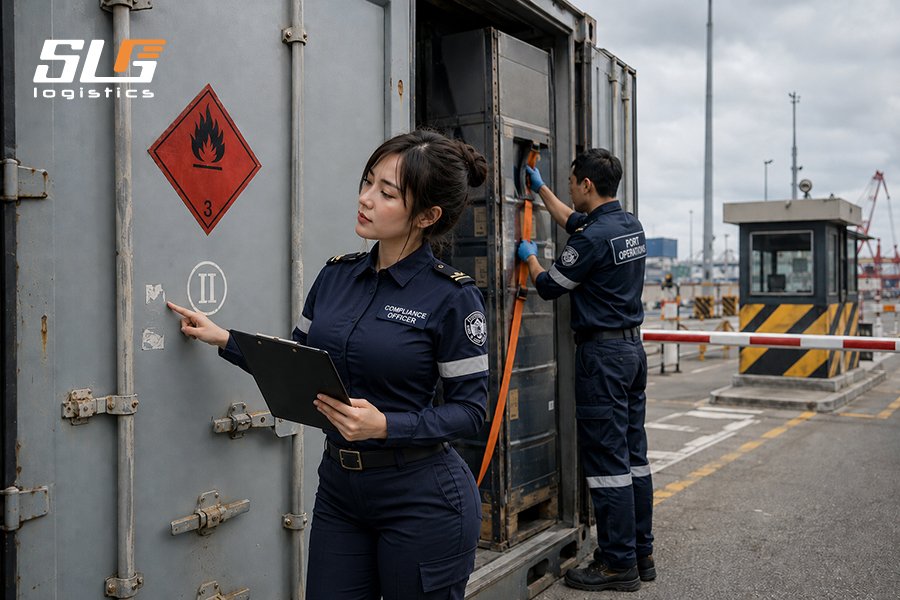
UK container ports at Felixstowe and Southampton enforce specific acceptance rules across nine United Nations hazard classes. Explosives in Class 1 need berth bookings approved by port marshals and police notices before arrival. Corrosive liquids in Class 8 must show verified flashpoints and compatibility checks to prevent vessel reactions.
- UN Class 1: Explosives require specialized carrier licensing and direct shipside delivery.
- UN Class 2: Flammable, non-flammable, and toxic gases require vessel stowage clearance.
- UN Class 3: Flammable liquids require verified flashpoint data on transport declarations.
- UN Class 4: Flammable solids demand moisture-free storage and segregation from oxidisers.
- UN Class 5: Oxidisers and organic peroxides require temperature-monitored reefer containers.
- UN Class 6: Toxic and infectious substances mandate double-containment specification packaging.
- UN Class 7: Radioactive materials require competent authority approval from nuclear regulators.
- UN Class 8: Corrosive substances require acid and alkali segregation within containers.
- UN Class 9: Miscellaneous goods including lithium batteries follow battery state-of-charge limits.
Packaging, UN Marking, and Container Segregation
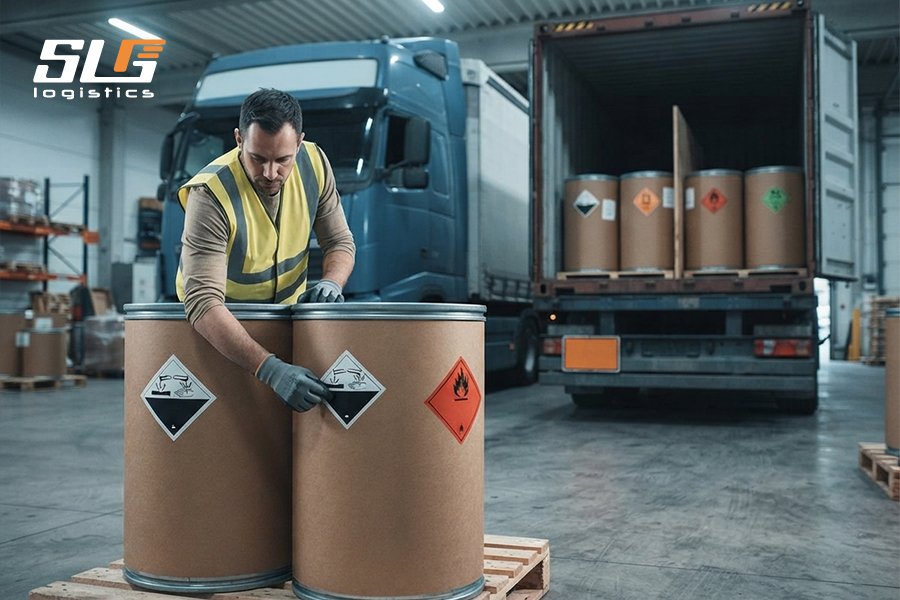
Hazard material transport compliance requires specific UN markings, hazard labels, and vehicle placards. The key items are UN code markings, opposing risk labels, and container placards. These rules keep transport and handling safe.
Packaging Standards
- UN code markings (such as 4G/Y145/S/24/GB) on outer boxes.
- Primary risk labels on packages.
- Subsidiary risk labels placed on opposing sides.
Sea containers destined for export must display hazard placards on all four sides before gate-in at UK terminals. European export trucks must carry orange plates on front and rear bumpers.
Consignors loading mixed hazardous items into one export container must check the IMDG segregation table to avoid reactions during ocean transit. Ignoring required separation distances leads to export hold orders at UK loading ports.
Sea Freight vs. Air Freight
Dangerous goods logistics vary by transport mode. Sea freight and air freight differ across several key operational criteria.
Volume and Capacity
Sea freight is best suited to bulk chemicals, ISO tanks, and heavy Class 3 or Class 8 cargo. By contrast, air freight only accepts small packages, limited quantities, or urgent samples.
Class Restrictions
Sea carriers accept most hazard classes if they approve the stowage. Air freight is much stricter. Classes 1, 2.3, and 5.2 are heavily restricted or banned on passenger aircraft. Such cargo can only be transported by cargo aircraft.
Lead Time and Costs
Sea freight needs documentation 48 to 72 hours before vessel cutoff. Air freight requires papers 24 hours before flight departure. For costs, sea freight charges variable rates per container or class. Air freight charges fixed handling fees per airway bill or hazard label.
Shipping Class 1 Explosives vs. General Hazardous Freight
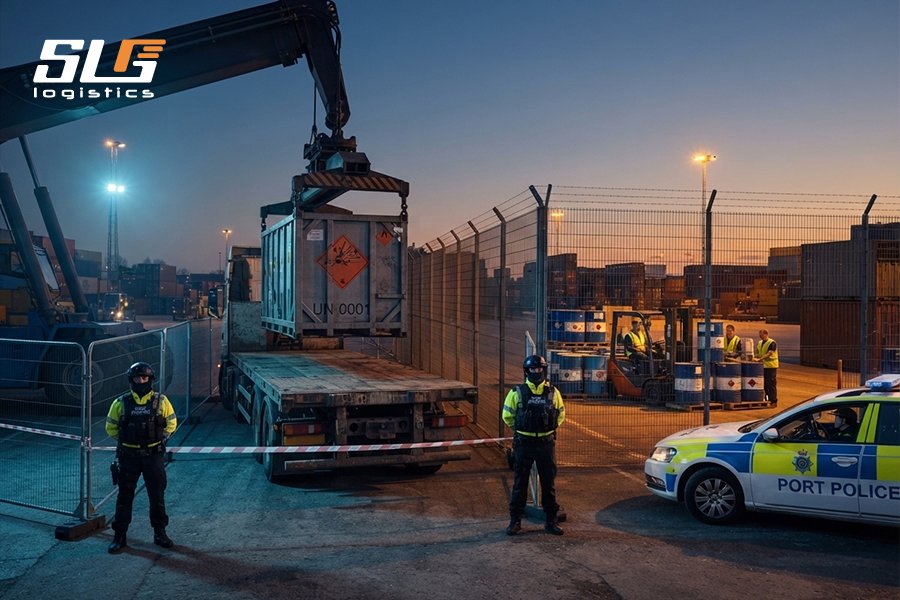
Exporting Class 1 explosives requires strict safety protocols like specialized packaging, dedicated port berths, and police escorts due to blast risks. Conversely, standard chemicals in Classes 2 through 9 only require general packaging.
Logistics firms moving explosives must hold dedicated Class 1 statutory handling licences instead of standard chemical permits. Class 1 transport licences allow direct liaison with police forces and UK port marshals during export loading.
Further Reading: How to Ship Class 1 Explosives from the UK
Transport Documentation and Operational Compliance
Cargo rejection at UK port terminals frequently occurs during paperwork inspections before freight enters container yards. Ocean carriers review transport paperwork against physical markings to confirm regulatory compliance.
- Safety Data Sheet Section 14
- Transport information must match declared flashpoints and UN numbers.
- Dangerous Goods Declaration
- Consignors must state proper shipping names and emergency contact details.
- Container Packing Certificate
- Packers must confirm freight securing compliance under the Cargo Transport Unit Code.
- Packaging Group Assignment
- Materials must carry accurate Packing Group I, II, or III packaging specifications.
Document verifications prevent port delays and protect carrier networks against undisclosed hazards. Proper shipping names must include technical names for generic chemical entries to pass carrier booking checks.
Licensed Dangerous Goods Forwarding
Managing regulated freight demands technical oversight across road and maritime channels. SLG Logistics maintains licensed capabilities for handling Class 1 explosives alongside standard Class 2 through 9 hazardous cargoes. Qualified staff oversee documentation compliance, port reservations, and carrier acceptance protocols. Contact SLG Logistics to request an export quote or to review dangerous goods shipping requirements for outbound UK freight.