
The trade corridor between the UK and Malaysia connects British businesses with a key Southeast Asian market. Malaysia serves as a manufacturing and distribution hub in the region, with steady demand for UK machinery, industrial components, electronics, and consumer goods. This contributes significantly to the annual bilateral exchange between the two countries.
As a guide, this article details the fundamental requirements for shipping from UK to Malaysia. Besides sea freight and air freight, it also covers the necessary documentation for customs entry.
Why ship from the UK to Malaysia?
Malaysia offers a stable and growing economy with strong trade links to the UK. Highly industrialised, it relies on advanced manufacturing processes that require imported technology. Therefore, the nation imports high volumes of specialized equipment from British manufacturers. Common cargo includes production equipment for the electronics sector, specialised machinery, and components that support local manufacturing.
- Infrastructure
- Malaysia features highly developed maritime logistics. It also has an established manufacturing base in electronics and electrical goods.
- Manufacturing Demand
- The local economy relies heavily on electronics manufacturing. This generates consistent demand for UK-engineered components.
- ASEAN Access
- Goods entering Malaysia can be effectively distributed to neighbouring ASEAN markets utilizing established cross-border infrastructure.
Sea freight from the UK to Malaysia
Sea freight handles the majority of commercial shipments from the UK to Malaysia. It provides a cost-effective way to move larger volumes over long distances.
SL Global Logistics directs sea freight UK to Malaysia schedules departing from major British ports. Cargo is specifically routed out of Felixstowe and Southampton. The destination ports in Malaysia are primarily Port Klang and Penang.
How long does sea freight from the UK to Malaysia take?
Sea freight is slower than air, but modern maritime routes between the UK and Malaysia are well-established and reliable. Typical transit times for sea freight from the UK to Malaysia are as follows:
- Port-to-Port Transit (Felixstowe to Port Klang): 22 to 28 days
- Door-to-Door Transit: 30 to 38 days
- Door-to-door estimates account for UK road haulage to the departure terminal and destination port processing. They also factor in customs clearance in Malaysia and final road delivery to the buyer’s facility.
NOTE: Times can vary with port conditions, weather, or route adjustments. Always confirm current schedules for your specific shipment.
Full Container Load (FCL) vs Less Than Container Load (LCL)
The decision between Full Container Load (FCL) and Less than Container Load (LCL) typically comes down to the shipment size.
Full Container Load (FCL)
You use an entire 20ft or 40ft container. The container is loaded at your premises, sealed, and remains unopened until destination. This option suits larger volumes, offers better security, and often provides more predictable transit times.
Less than Container Load (LCL)
Your goods share container space with other shipments. You pay based on the volume (cubic metres) used. LCL works well for smaller consignments. However, this often involves extra handling time during consolidation and deconsolidation. Expect additional days to the total transit time compared to FCL shipments.
What does sea freight to Malaysia cost?
Sea freight costs depend on several variables and fluctuate with market conditions. Volume and weight are primary factors. LCL pricing is usually based on cubic metres, while FCL uses a flat rate per container.
Other influences include:
- Chosen Incoterms (who handles which part of the journey)
- Fuel surcharges and other carrier fees
- Seasonality and route demand
- Any special handling requirements
Need an exact price for your shipment? Don’t rely on rough estimates. Get a free, no-obligation quote from SLG Logistics today to find the most cost-effective route for your cargo.
Air freight from the UK to Malaysia
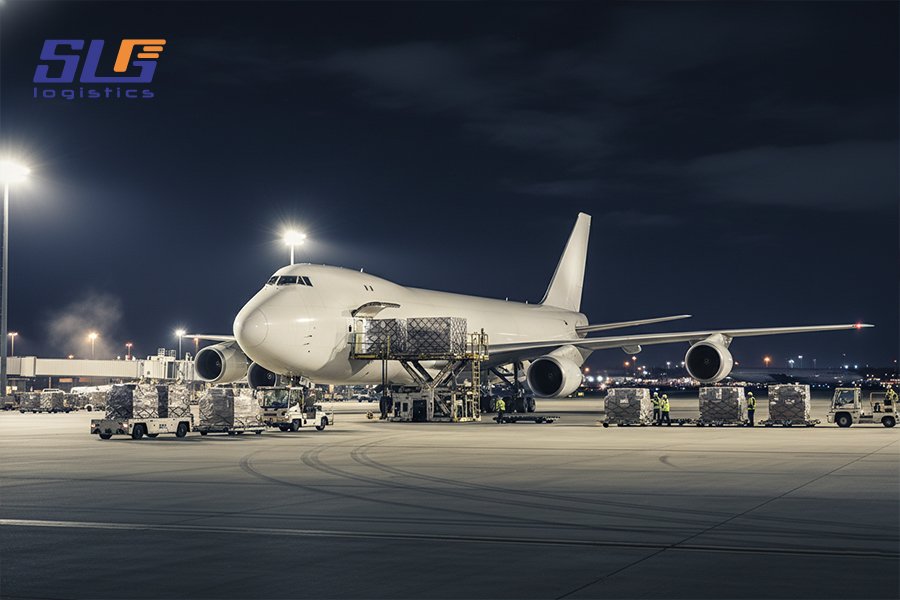
Air freight delivers faster transit for time-sensitive or high-value goods. Shipments typically move from UK airports such as Heathrow to Kuala Lumpur International Airport (KLIA).
Discover our dedicated Air Freight services for time-critical global logistics.
When to choose air freight over sea
Air freight makes sense when speed outweighs cost. Common scenarios include:
- Urgent replacement parts to avoid production downtime
- High-value or sensitive items where shorter transit reduces risk
- Perishable or temperature-controlled goods
- Samples or seasonal stock for market testing
SL Global Logistics advises shippers to weigh the premium against potential savings from faster delivery and lower inventory holding.
Air freight transit times UK to Malaysia
Air freight significantly reduces journey time:
- Airport-to-airport: Typically 3–5 days
- Door-to-door: Often 5–8 days, including clearance and delivery
Exact times depend on flight schedules, customs, and final destination within Malaysia.
Customs clearance for shipments to Malaysia
Border compliance dictates the efficiency of the delivery schedule. This requires accurate documentation and compliance with Malaysian regulations. Getting the paperwork right and knowing the local tax landscape makes the process straightforward.
SLG Logistics provides in-house Customs Clearance services to ensure your goods cross the border without delay.
Malaysia import duties and taxes
Malaysia applies import duties based on the Harmonized System (HS) code of the goods. Rates range from 0% to higher percentages depending on the product category. Many manufactured goods, especially in priority sectors, attract lower or zero duties.
Malaysia also levies a Sales and Services Tax (SST), currently around 6–10% on most imported goods (verify current rates). This is calculated on the CIF value (Cost, Insurance, Freight) plus any applicable duties.
NOTE: Avoid specific rate claims, as these can change. Refer to the Royal Malaysian Customs Department (RMCD) website for official information.
Documents required to ship to Malaysia
Accurate documentation is a mandatory requirement for international freight. The Royal Malaysian Customs Department (RMCD) mandates the submission of specific import declarations alongside standard shipping documents.
You must ensure your shipment is accompanied by:
- Customs Form No. 1 (K1 Form)
- The mandatory official import declaration document required by the RMCD for all goods entering Malaysia. It details the quantity, value, country of origin, and correct HS codes for duty assessment.
- Approved Permit (AP) / Import License
- Required conditionally for restricted or controlled items, such as specific electronics or agricultural goods, issued by relevant Malaysian government agencies.
- Commercial Invoice
- The Commercial Invoice must detail the buyer, the seller, the exact value of the goods, and the correct HS codes.
- Packing List
- The Packing List must state the dimensions and packaging type of every unit.
- Bill of Lading (Sea) or Air Waybill (Air)
- The official contract of carriage between the shipper and the carrier, issued by your freight forwarder.
- Certificate of Origin
- This is required when claiming preferential tariff treatment.
Keep records accurate and consistent across documents to prevent queries at the border.
Specialist cargo: what can you ship to Malaysia?
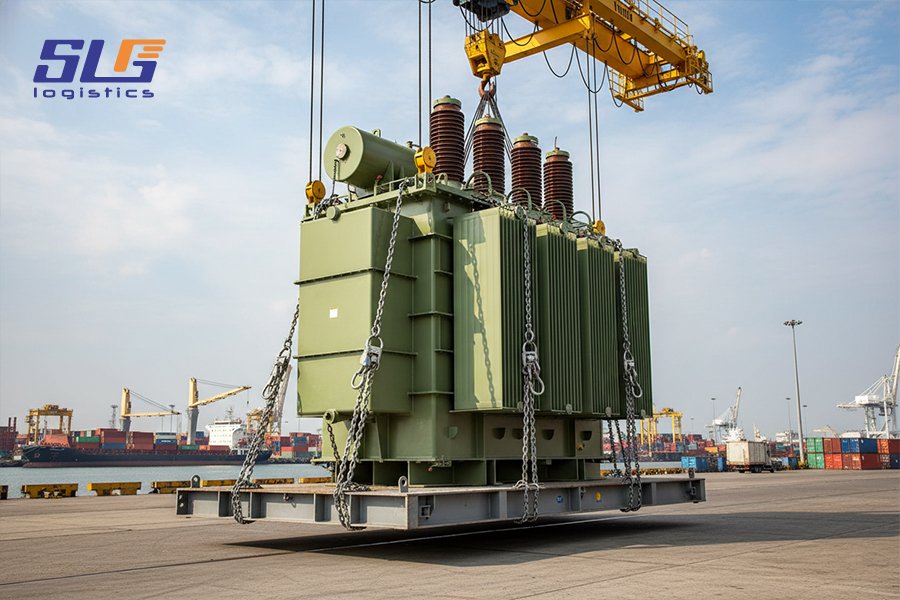
Malaysia imports a wide range of goods, but some categories need extra attention. These include dangerous goods, out-of-gauge (OOG) items, perishables, and temperature-sensitive cargo.
If you are shipping out-of-gauge (OOG) machinery, industrial vehicles, or hazardous materials, standard shipping procedures do not apply. SLG Logistics is licensed and experienced in handling specialist cargo. We manage everything from flat-rack container lashing for oversized equipment to strict regulatory compliance for Dangerous Goods (UN Classes 1-9).
Specialist cargo carries higher risk in transit. We recommend securing comprehensive insurance cover to protect your goods and your business. Review our Freight Insurance services for full door-to-door cover.
Warehousing and door-to-door delivery in Malaysia
Existing Malaysian logistics infrastructure can support temporary warehousing needs. For value-added services, shippers can also conduct inventory management, consolidation, or cross-docking before onward distribution. Local facilities are able to handle both standard and specialist cargo.
For companies entering the Malaysian market or supplying several local customers, this flexibility is valuable. Goods can be stored until needed, then delivered on a scheduled or just-in-time basis. That helps manage cash flow, reduce stockholding costs, and respond to local demand more efficiently.
Many UK exporters require more than port-to-port transport. For the full journey, engage door-to-door services. While the cargo is in UK, this covers collection from your UK premises and export customs formalities. Ocean or air freight ensues. After the cargo arrives in Malaysia, it also covers import clearance, and final delivery to the consignee’s address. This reduces coordination effort and keeps you in control of the process.
When planning, consider whether a basic port delivery or a fuller logistics solution better fits your supply chain. A freight forwarder can help you identify the most practical and cost-effective setup for your cargo and destination within Malaysia.
Frequently Asked Questions
How long does shipping from the UK to Malaysia take?
Sea freight typically takes 22–28 days port-to-port. Air freight usually takes 3–5 days airport-to-airport. Door-to-door times are longer and depend on specific arrangements.
What is the cheapest way to ship to Malaysia from the UK?
Sea freight (especially FCL for larger volumes) is generally the most cost-effective option for non-urgent shipments.
Do I need a customs broker to import into Malaysia?
Using a licensed broker is strongly recommended. They handle electronic submissions and local requirements to reduce delays.
What items are restricted from importing into Malaysia?
Restrictions apply to certain goods such as firearms, narcotics, endangered species products, and specific agricultural or cultural items. Check current RMCD guidelines.
Can I ship dangerous goods to Malaysia from the UK?
Yes, with proper classification, packaging, documentation, and licensing. Only approved carriers and handlers should manage these shipments.
What documents do I need to export goods to Malaysia?
Core documents include Malaysia’s Customs Form No.1, also known as the K1 Form, as well as the commercial invoice, packing list, bill of lading or air waybill, and certificate of origin where applicable.