
Singapore is globally recognised not just as an economic powerhouse, but as Southeast Asia’s premier logistics hub. For British businesses, the UK–Singapore trading relationship creates real opportunities: whether you are an e-commerce brand fulfilling overseas orders, a manufacturer exporting industrial equipment, or an individual relocating abroad.
International freight can feel complicated. This guide cuts through that, covering everything you need to make confident shipping decisions. Learn more about choosing between air and sea freight, as well as understanding customs clearance and transit times. Your next export to Singapore can be seamless, cost-effective, and fully compliant.
Why Singapore is a key destination for UK exporters
There has never been a better time to export to Southeast Asia, and Singapore stands out for good reason. Modern trade agreements and world-class infrastructure has made it one of the most accessible markets for UK businesses.
- The UK–Singapore Free Trade Agreement (UKSFTA)
- The UKSFTA came into force in February 2024. It reduces or eliminates tariffs on a large majority of UK goods entering Singapore. For British exporters, it translates to a meaningful competitive edge in the region.
- A Global Transshipment Hub
- Singapore’s strategic geographical location makes it a major transshipment hub. Many shipments heading to neighbouring ASEAN countries, like Malaysia, Indonesia, Vietnam, route through Singapore first. Establishing a reliable shipping lane here effectively opens the door to the rest of Southeast Asia.
- World-Class Port Efficiency
- The Port of Singapore (PSA) is consistently ranked among the world’s busiest and most efficient maritime ports. For UK exporters, that means faster turnaround times, lower risk of congestion, and reliable cargo handling.
- High Demand for UK Goods
- Singapore boasts a wealthy, highly developed market with a strong appetite for British goods. This includes UK-manufactured machinery, pharmaceutical products, electronic components, and premium retail goods.
Sea freight from the UK to Singapore
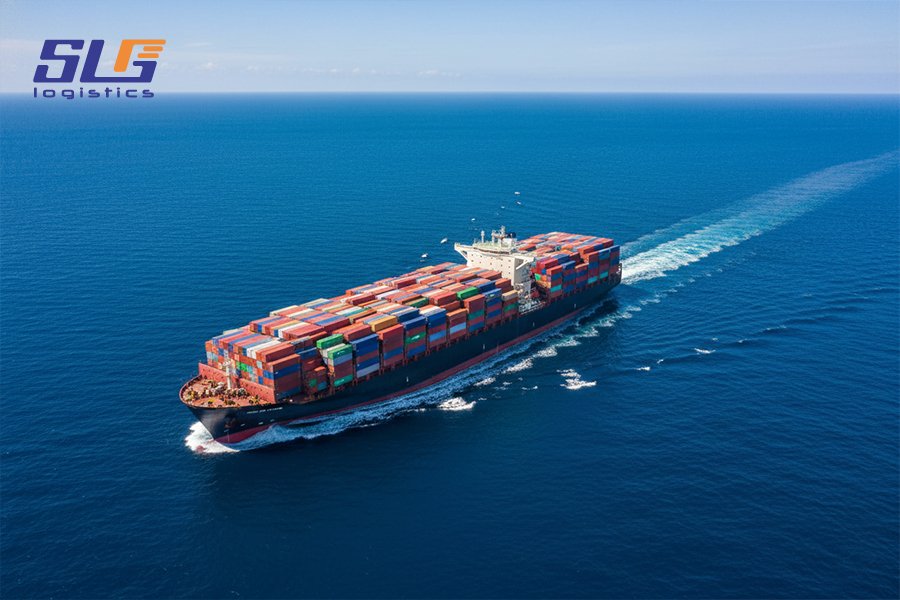
For most commercial exports, sea freight is the most popular choice. It is cost-effective and the environmental footprint is lower than air. If you are planning a sea freight shipment to Singapore, understanding your container options and realistic timelines will help you plan with confidence.
SLG Logistics offers comprehensive Sea Freight services from all major UK ports directly into the Port of Singapore.
How long does sea freight from the UK to Singapore take?
Sea freight is slower than air, but modern maritime routes between the UK and Singapore are well-established and reliable. From major UK ports such as Southampton or Felixstowe, typical transit times are:
- Port-to-Port Transit: 24–30 days
- Door-to-Door Transit: 30–40 days (factoring in UK road haulage, customs clearance on both ends, and final delivery in Singapore)
NOTE: Transit times are estimates. Times can vary due to seasonal port congestion, weather, or global route disruptions.
Full container load (FCL) vs less than container load (LCL)
When booking sea freight, you will need to choose between FCL and LCL shipping.
Full Container Load (FCL) means renting an entire 20ft or 40ft container for your goods alone. The container is sealed at your UK facility and stays unopened until it reaches Singapore. This makes FCL the most secure and straightforward option. It is ideal for high-volume exporters or those shipping large, fragile machinery.
Less than Container Load (LCL) is designed for smaller shipments. Your goods share container space with cargo from other shippers heading to Singapore. This means you only pay for the cubic metre space you use, keeping costs down for smaller volumes. However, LCL typically takes a little longer than FCL. This is because the container needs to be consolidated before departure and deconsolidated on arrival.
What does sea freight to Singapore cost?
Because global shipping markets fluctuate, there is no single flat rate for sea freight. However, sea freight is exponentially cheaper than air freight, particularly for heavy or bulky cargo.
Your final sea freight costs will be influenced by:
- Volume and Weight
- The physical footprint of your cargo (measured in cubic metres or CBM) is the primary cost driver for LCL, while FCL is charged at a flat container rate.
- Incoterms
- The shipping terms agreed with your buyer will dictate whether you or the buyer are paying for the final leg of the journey and the associated import taxes.
- Surcharges
- Fuel surcharges (BAF), currency adjustment factors (CAF), and seasonal peak demand (such as the rush before the Lunar New Year) can all impact pricing.
Need an exact price for your shipment? Don’t rely on rough estimates. Get a free, no-obligation quote from SLG Logistics today to find the most cost-effective route for your cargo.
Air freight from the UK to Singapore
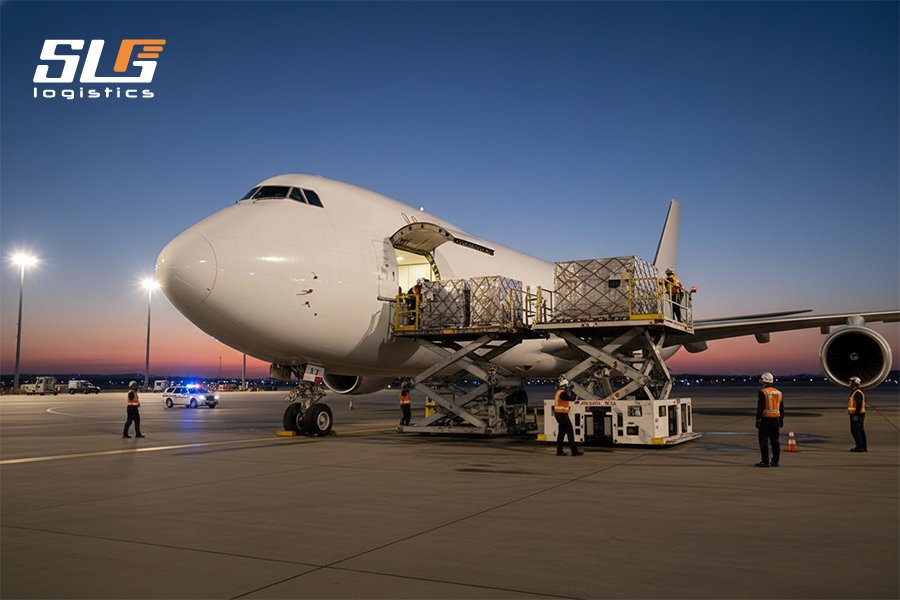
When speed matters, air freight is the right choice. SLG Logistics routes air cargo from major UK airports (such as London Heathrow) into Singapore Changi Airport, which is known for its fast, automated cargo handling.
Discover our dedicated Air Freight services for time-critical global logistics.
When is air freight to Singapore worth the premium?
Air freight costs more than sea freight, but for certain shipments the extra cost makes clear sense:
- Time-Critical Shipments
- If a factory in Singapore is facing downtime and needs a replacement part from the UK, air freight can save far more money than it costs. Speed becomes the priority.
- High-Value Goods
- For electronics, luxury goods, or sensitive data servers, a shorter transit time reduces the risk of theft, damage, or loss.
- Perishable Cargo
- Pharmaceuticals, sensitive chemicals, and perishable foods need rapid, temperature-controlled transit. Air freight is the only mode that can reliably deliver that.
- Sample Products
- E-commerce brands often use air freight to send seasonal product samples to distributors ahead of a larger sea freight rollout.
Air freight transit times UK to Singapore
Air freight provides unmatched speed. This transforms a month-long journey into a matter of days.
- Airport-to-Airport: 1–2 days
- Door-to-Door (including customs clearance): 2–4 days
Singapore customs clearance: what UK shippers need to know

Customs compliance is often the part that worries people most. However, it does not have to be complicated. While Singapore has strict regulatory standards, its customs protocols are efficient once you understand what is required. Getting your paperwork right and knowing the local tax landscape makes the process straightforward.
Further Reading: Understanding Singapore’s Import Regulations
SLG Logistics provides in-house Customs Clearance services to ensure your goods cross the border without delay.
Singapore import duties and GST
Understanding Singapore’s import duties is important for pricing your products accurately in the market.
Thanks to the UKSFTA, many UK-originating goods can enter Singapore tariff-free. That said, almost all imported goods are subject to the Goods and Services Tax (GST), currently set at 9% (as of 2024).
GST is calculated on the CIF value (Cost, Insurance, and Freight) of the goods. Non-GST registered businesses and individuals importing personal goods may qualify for an exemption: goods valued under SGD 400 are currently GST-free.
NOTE: Tax regulations change. We recommend checking the Inland Revenue Authority of Singapore (IRAS) website for the most up-to-date tax advice, or speaking directly to our customs brokers.
Export documents required for Singapore shipments
To clear both UK outbound customs and Singapore inbound customs, you will need to prepare a specific set of documents. Missing paperwork is the number one cause of border delays.
You must ensure your shipment is accompanied by:
- Commercial Invoice
- A detailed bill of sale outlining the buyer, seller, exact value of the goods, and the HS (Harmonised System) codes for every item.
- Packing List
- A detailed breakdown of how the goods are packed, including weights, dimensions, and packaging types (e.g., pallets, cartons).
- Bill of Lading (Sea) or Air Waybill (Air)
- The official contract of carriage between the shipper and the carrier, issued by your freight forwarder.
- Certificate of Origin
- Crucial for claiming preferential tariff rates under the UKSFTA, this document proves that your goods were manufactured in the UK.
- Customs Import Permit
- Handled electronically by your customs broker via Singapore’s TradeNet system prior to the cargo’s arrival.
Shipping to Singapore for personal relocation
Singapore is a popular destination for UK expatriates, whether for a new role or a lifestyle change. Relocating overseas is a different process to commercial shipping. Personal effects cannot be treated as standard cargo. They need specific packing standards, detailed customs inventories, and often, door-to-door white-glove delivery.
At SLG Logistics, we handle more than commercial freight. Whether you are shipping a few boxes of cherished items by air or an entire household via a dedicated FCL container, we manage the logistics so you can focus on your move.
Learn more about our dedicated Relocation Services for expats moving to ASEAN destinations.
Specialist and oversized cargo to Singapore
Singapore’s construction, marine engineering, and chemical sectors regularly import specialist materials from the UK. However, not all such cargo fits on a standard pallet.
If you are shipping out-of-gauge (OOG) machinery, industrial vehicles, or hazardous materials, standard shipping procedures do not apply. SLG Logistics is licensed and experienced in handling specialist cargo. We manage everything from flat-rack container lashing for oversized equipment to strict regulatory compliance for Dangerous Goods (UN Classes 1-9).
Specialist cargo carries higher risk in transit. We recommend securing comprehensive insurance cover to protect your goods and your business. Review our Freight Insurance services for full door-to-door cover.
Request A Quote For Shipping To Singapore
Ready to streamline your export strategy to Southeast Asia? Whether you are weighing up the costs of sea freight or need urgent air transit for a critical delivery, our team is ready to build a bespoke solution for your cargo. Contact us to get a quote for shipping to Singapore today!
Frequently Asked Questions
How long does shipping from the UK to Singapore take?
Air freight is the fastest option, typically taking 2 to 4 days from door to door. Sea freight is much slower but more cost-effective. It takes approximately 24 to 30 days port-to-port, or 30 to 40 days door-to-door, depending on port conditions and customs processing.
Is there a UK–Singapore free trade agreement?
Yes. The UK–Singapore Free Trade Agreement (UKSFTA) came into force in February 2024. This vital agreement reduces or eliminates tariffs on many UK exports to Singapore, making British goods highly competitive in the local market. You will need to provide a Certificate of Origin to benefit from these reduced tariffs.
What is the GST rate on imported goods in Singapore?
The Goods and Services Tax (GST) in Singapore is 9% since 2024. This is levied on the CIF (Cost, Insurance, and Freight) value of most imported commercial goods. However, goods valued under SGD 400 imported by non-GST registered businesses or individuals may currently be exempt.
Can I ship personal belongings from the UK to Singapore?
Absolutely. You can ship personal effects and household goods to Singapore. However, personal belongings require detailed packing inventories and specific customs declarations. SLG Logistics provides dedicated relocation services to help expatriates manage this process smoothly。
What goods are prohibited from importing into Singapore?
Singapore has strict customs regulations. Prohibited items include chewing gum (with exceptions for dental/therapeutic gum), firecrackers, certain telecommunication equipment, endangered species, and specific agricultural products. It is vital to check the latest guidelines from Singapore Customs before shipping.
Do I need a freight forwarder to ship to Singapore?
While not legally required, using a freight forwarder is highly recommended for B2B shipping. A forwarder like SLG Logistics handles the complex coordination of haulage, sea/air booking, customs brokerage, and insurance. This helps prevent costly border delays and ensures your shipment is legally compliant.