
UK exporters shipped £937.3 billion in goods and services in the 12 months leading to February 2026. While promising, businesses involved in international trade face high costs and operational challenges when goods move across borders. Consequently, engaging a logistics partner is often necessary to secure the supply chain. This guide outlines key criteria to evaluate when selecting a freight forwarder, focusing on practical insights tailored to UK importers and exporters shipping to ASEAN countries.
Industry Accreditations
Legitimate logistics providers operate within a framework of professional standards that protect the interests of the exporter. Choosing an unaccredited forwarder introduces unnecessary legal and financial exposure to a business. Reliable partners demonstrate their commitment to industry standards through specific certifications:
- BIFA (British International Freight Association)
- Membership in BIFA signifies that the forwarder adheres to the 2025 Standard Trading Conditions, which became effective on 31 December 2025. These conditions govern liability limits and provide a clear legal structure for the relationship between the forwarder and the client.
- AEO (Authorised Economic Operator)
- Granted by HMRC, AEO status indicates that a business has met strict criteria regarding customs compliance and financial solvency. The UK government maintains that AEO holders benefit from a lower risk score, which reduces the frequency of physical documentation checks at the border.
- FIATA (International Federation of Freight Forwarders Associations)
- This global accreditation ensures that the forwarder operates according to international transport standards; it provides a level of uniformity for shipments moving across multiple jurisdictions.
- IATA (International Air Transport Association)
- For businesses moving cargo via air, IATA certification confirms the forwarder is authorised to issue waybills and manage air freight according to global safety and security protocols.
Geographical Network
A forwarder’s effectiveness is tied to the depth of their physical presence and established relationships in both the origin and destination markets. Forwarders with direct presence has someone at the destination that can act promptly when something goes wrong. However, those that subcontracts will find that responsiveness depends on a third party the client has never interacted with.
Further Reading: 9 Tips for Successful Export
Additionally, local market knowledge has practical consequences that are not always immediately visible. Take the UK-to-ASEAN corridor, for example. Port congestion cycles, seasonal disruption risks, bonded warehousing availability, local customs processing norms, and standard container dwell times at specific terminals all vary by country. Businesses shipping into this region need a forwarder with named, established partners in specific countries such as Singapore, Malaysia, Vietnam, and Cambodia, rather than a generic claim to a worldwide agent network.
One signal worth examining when evaluating a forwarder’s Southeast Asian relationships is whether their Singapore-based partners hold membership with the Singapore Logistics Association (SLA). The SLA is the trade body representing Singapore’s logistics sector. SLA membership among a forwarder’s in-market partners indicates that those partners operate within a professionally governed structure and are accountable to defined industry standards. This provides a traceable point of responsibility in the event of any in-country difficulty.
Further Reading: Shipping from UK to Singapore: The Complete Guide
Service Offerings
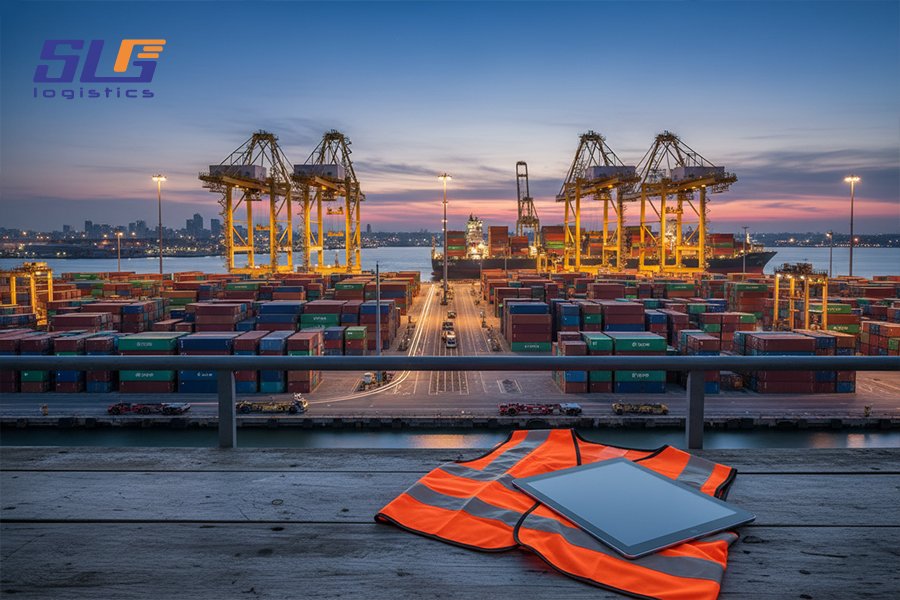
Relying on separate providers for different legs of a journey often leads to coordination problems and added expenses. Comparatively, a single forwarder that manages the full process delivers better consistency and accountability from pickup to final delivery.
Companies benefit when one partner handles Air Freight, Ocean Freight, and Inland Trucking under unified terms. This approach proves especially practical for UK exporters sending mixed shipments to ASEAN destinations, where seamless transfers between sea, air, and road options prevent unnecessary holds or extra handling fees.
- Air Freight suits time-sensitive UK exports such as pharmaceuticals or high-value components heading to Singapore or Vietnam.
- Sea Freight provides cost-effective capacity for larger volumes to Malaysian or Cambodian ports.
- Land Trucking completes the chain with reliable last-mile delivery within destination countries.
Pricing Transparency

Headline rates in logistics are often misleading if they do not include the full range of ancillary charges. Freight invoices can be inflated by unexpected fuel surcharges, documentation fees, and port handling costs that were not clearly itemised in the initial quotation.
A reputable forwarder provides a comprehensive breakdown of all anticipated expenses before the shipment commences. Transparency in pricing allows an exporter to calculate their landed costs accurately and avoid disputes once the cargo has arrived.
Customs Expertise
Customs clearance is frequently the most difficult aspect of international shipping. Errors in documentation or incorrect tariff classifications lead to expensive storage fees and shipment holds.
Forwarders that act as licensed customs brokers in-house manage declarations, tariffs, and documentation directly. This setup helps UK exporters avoid unexpected duties or prolonged border examinations. Proper expertise proves valuable when exporting to markets with specific rules on product classification or origin verification.
Communication Standards

Logistics operations are susceptible to external disruptions including port congestion and weather events. The differentiator between forwarders is not whether disruptions happen; it is the quality and speed of communication when they do.
Businesses can assess standards early by observing how quickly and clearly a forwarder replies during initial quote requests. Here, direct access to a dedicated account manager is preferable to a general customer service queue or an automated tracking portal. Consistent information flow allows UK exporters to adjust plans promptly and inform their customers reliably.
Risk Management
Two separate frameworks govern how much of a cargo loss a carrier is actually liable to cover, and many businesses are surprised by the gap between those limits and the commercial value of what they are shipping.
Under the Hague-Visby Rules, which govern sea freight and apply in the UK, carrier liability is capped at 666.67 SDR per package or unit, or 2 SDR per kilogram of gross weight, whichever is greater. Meanwhile Under the Montreal Convention, which governs air freight, the maximum carrier compensation is 19 SDR per kilogram of cargo lost or damaged. Where goods carry a high commercial value relative to their physical weight, these caps leave a significant gap between what the carrier owes under the applicable convention and what the cargo was actually worth at the time of loss.
Comprehensive cargo insurance exists to cover that gap. Arranged through a forwarder or directly through an insurer, it covers the full declared commercial value of the goods rather than the carrier’s convention-limited liability. A business that exports regularly without cargo insurance is exposed to that gap on every shipment.
Reputable forwarders present insurance options and explain liability limits upfront. For UK exporters, clear terms on claims processes limit exposure when goods travel long distances to ASEAN markets.
Conclusion
Selecting the right logistics partner is an investment in the long-term viability of a company’s export strategy. A structured evaluation based on accreditation, network depth, and transparency ensures that a business can navigate the complexities of international trade with confidence.
Ensure your global supply chain is in expert hands. With comprehensive accreditations, extensive UK-ASEAN networks, and end-to-end logistics solutions, SLG Logistics is equipped to handle your unique freight requirements. Contact us today for a tailored shipping quote.