
UK businesses trading internationally are facing changes to how customs declaration information is accessed and reviewed in 2026. This article explains the major changes, their impact, and how exporters should react.
Further Reading: Guide to UK Customs Clearance
HM Revenue & Customs (HMRC) TRE
The Trade Reporting and Extracting (TRE) service serves as HMRC’s primary online hub for cross-border shipping data. Paid MSS subscriptions ended on 31 March 2026. Fortunately, the replacement service provides free access to customs declaration data.
NOTE: These reports previously cost businesses up to £960 plus VAT each year.
Exporters now obtain their declaration records directly through their organisation Government Gateway credentials. The available reports cover four formats, with export item reports containing commodity codes, values and export measures. Meanwhile, import reports include declaration headers and tax-line information. Each request generates within 72 hours, covering up to 31 days of export activity.
Direct access gives business owners clear visibility over their shipments. It also allows them to monitor import and export activity over time. Yet, this access also places legal duties onto British boardrooms. Using a customs agent does not automatically remove responsibility for declaration accuracy, however. In reality, the registered Economic Operator Registration and Identification (EORI) number holder remains responsible for every tax declaration. Businesses should retrieve their monthly TRE downloads to confirm that agents file properly.
Further Reading: What Is An EORI Number?
Increased Audit Scrutiny

Customs audits by HMRC increased across the UK during the opening two quarters of 2026. The Customs Declaration Service now uses automated flags to detect filing discrepancies by comparing customs declarations against corporate VAT returns. When a discrepancy is spotted, formal audit notices are issued within weeks of export departure.
HMRC scrutiny concentrates upon four distinct operational risk areas:
- Commodity code misclassification across technical components, finished electronics, and dual-use consumer goods.
- Customs value calculations that omit freight charges or licence fees.
- Unverified trade origin claims made without signed supplier proofs.
- Misused procedure codes for tax relief claimed without prior permits.
Financial penalties for inaccurate declarations accrue rapidly under the customs civil penalty regime. Minor clerical errors bring statutory civil fines of £250 per entry. More serious errors result in fines of £2,500 per entry and loss of customs facilitations. Where audit checks find flawed or missing export entries, HMRC revokes VAT zero-rating on those consignments. Officers then issue retrospective tax assessments for the full 20 percent UK VAT. These demands apply to total sales value, backdated across four full accounting years. Exporters who use special customs procedures risk having their duty relief cancelled. This forces the immediate repayment of previously waived import duties. Traders seeking an immediate assessment of declaration records can request a customs clearance compliance review through specialist advisers.
Intermediary standards tightened following the release of BSI PAS 41201:2026 for customs agents. The new benchmark requires accredited brokers to audit five percent of their customs entries every quarter. Accredited agents run regular internal checks to catch mistakes early. In contrast, low-cost filing services often submit flawed entries straight to HMRC. British exporters should confirm that logistics partners maintain these structured verification checks to prevent penalty notices.
Further Reading: Advantages of Using a Freight Forwarding Company
The Digital ATA Carnet (eATA)
The digital ATA Carnet launched across thirty participating territories on 1 June 2026. This includes the UK, Norway, Switzerland, and European Union member states. Exporters can download digital carnets directly to the official mobile app. This is most commonly applied when moving commercial samples or demonstration equipment. Customs officers at participating borders scan quick-response codes on mobile devices to validate the temporary movement of goods. Exporters moving equipment onward to Asian destinations must still carry physical paper carnets. This backup is necessary because some destinations still use the old method. For example, customs authorities in Malaysia and Thailand retain the traditional paper system. Maintaining dual documentation prevents border delays across combined digital and paper routes.
Further Reading: Shipping from UK to Malaysia: The Complete Guide
UK Trade Agreement Updates 2026
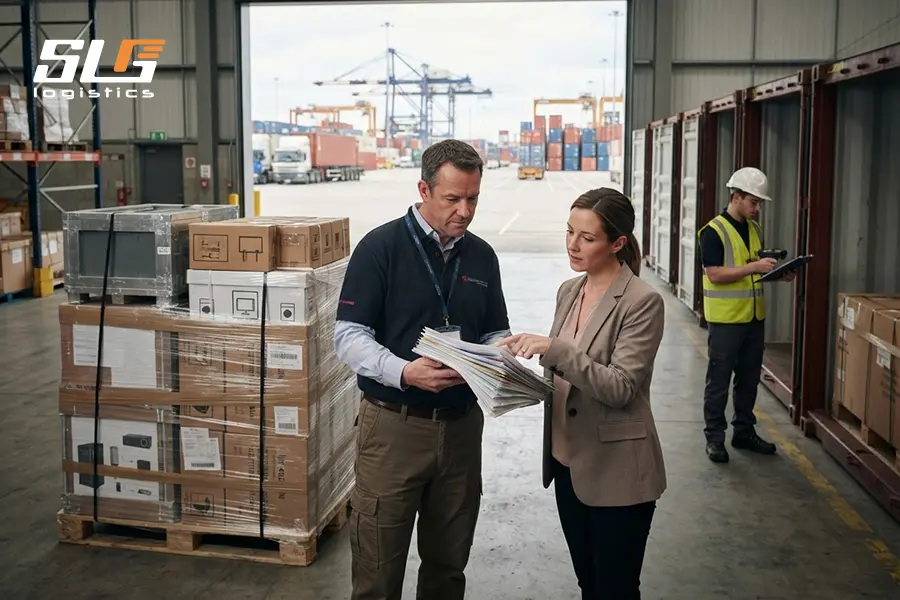
British trade pacts allow overseas buyers to clear UK goods at zero or sharply discounted tariff rates. That is, provided exporters issue valid proofs of origin to help avoid paying standard Most Favoured Nation border duties. These preferential tariff regimes make British products cheaper across Southeast Asia. However, foreign customs authorities only grant duty relief under strict rules. The paperwork has to prove that the goods satisfy agreed transformation thresholds.
Exporters navigate two distinct options: bilateral deals and regional trade agreements. Bilateral agreements use simpler qualifying rules. These rules depend solely on work shared with a single partner country. In contrast, regional treaties let factories source parts across several member states. Selecting the wrong trade route on export documents causes foreign customs officers to reject claims. Three specific trade pacts govern market access into Southeast Asian ports. Supplying correct paperwork shields overseas buyers from unexpected border fees.
Comprehensive and Progressive Agreement for Trans-Pacific Partnership (CPTPP)
The UK’s accession to the CPTPP opens preferential tariff routes into Malaysia, Singapore, Vietnam, and Brunei. CPTPP origin formulas operate differently from bilateral pacts. Most industrial goods qualify through a tariff shift or a 40 percent regional content test.
Diagonal cumulation is the central operational feature of the CPTPP framework. Under this rule, parts from any member country count toward qualifying origin totals. A British manufacturer can combine hydraulic components from Malaysia and electrical switches from Vietnam. Both inputs count toward the required origin threshold.
Exporters need to retain complete manufacturing cost records for every shipment. This is because HM Revenue and Customs audits origin paperwork regularly. Overseas border agencies can also cancel tariff relief and issue backdated tax demands when evidence is missing.
UK-Singapore Free Trade Agreement (UKSFTA)
The bilateral UKSFTA provides zero tariffs on UK industrial goods entering Singapore. Annual tariff staging continues through 2026. These staging rules maintain duty-free treatment on machinery units, chemical mixtures, consumer goods, and electrical tools.
Singapore customs officers require proof of origin before granting duty-free clearance. The declaration is typically placed directly on the commercial invoice. Exporters must also state their GB EORI number within the text. In addition, compliance files must hold signed supplier declarations proving that goods meet product origin rules.
UK-Vietnam Free Trade Agreement (UKVFTA)
The UKVFTA sets preferential tariffs for UK goods landing in Vietnam. Scheduled tariff reductions continue through 2026. These updates lower duties on British medicines, production tools, food items, and motor vehicle parts.
Vietnamese customs inspectors enforce rigorous proof-of-origin standards on arriving consignments. On consignments valued up to 6,000 euros, exporters self-certify origin by adding a declaration to shipping forms. Once values exceed 6,000 euros, exporters must register in the customs database or provide an approved certificate. Retaining accurate supplier records prevents cargo holds at Vietnamese ports.
ICS2 Phase 3
The European Union now enforces its Import Control System 2 (ICS2) Release 3 regulations. This safety framework requires digital Entry Summary (ENS) filings for road and rail freight. Official European Commission ICS2 rules confirm a new requirement. Pre-arrival declarations now apply to all roll-on/roll-off ferry cargo.
Compliance requires granular data submissions before freight reaches European territory. European border authorities reject generic goods descriptions such as “parts” or “clothing”. Shippers must provide complete six-digit tariff codes, detailed descriptions, and recipient EORI numbers. European border officials will issue Do Not Load notices if hauliers submit incomplete safety data. Cargo then faces long transport delays at Dover, Holyhead, and Folkestone.
These European transit rules also affect goods bound for Asian markets. Many British manufacturers move global cargo through continental hubs like Rotterdam or Frankfurt. Now, cargo must pass digital transit checks at the Channel. If a consignment fails, it cannot connect with intercontinental ships.
UK Single Trade Window
The status of the UK Single Trade Window (STW) is a major point of confusion for traders following the recent 2026 digital updates. The UK government originally designed the £180 million Single Trade Window initiative to streamline data by allowing importers and exporters to submit all border documentation once through a single portal.
As of writing time, however, the project is formally paused. Because the first strategic release was shelved, its planned user interface for UK Safety and Security did not launch. This is why traders still have to submit separate digital Entry Summary (ENS) filings under the EU’s ICS2 regulations.
Despite the heavy pauses, the government recently reopened feedback channels through HMRC. Officials asked businesses to submit views on how to reshape the tool so it can eventually deliver value without breaking the budget.
Conclusion
The 2026 changes collectively raise the compliance bar for UK exporters. Declaration accuracy is now an EORI holder’s direct responsibility. Meanwhile, HMRC audit activity is increasing.
At SL Global Logistics, our established corporate offices manage destination clearance directly. We specialise in integrating international ocean and air freight forwarding with local regulatory compliance. Exporters preparing international shipments can request a customs review and freight quotation through our operations team to secure smooth transit across British and Southeast Asian borders.